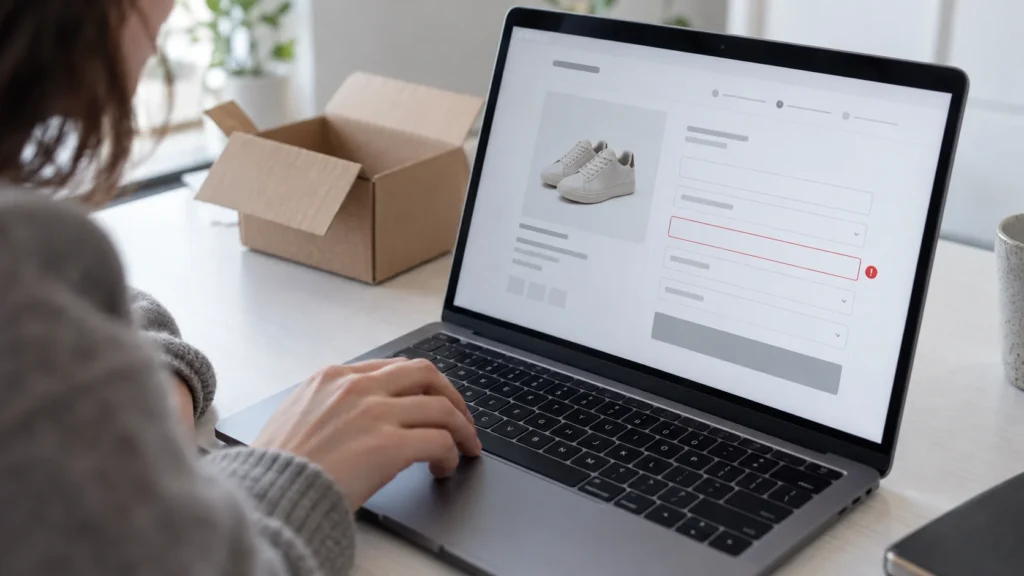
Your ads get clicks but no sales? Follow the journey from the click to the purchase and check whether measurement works. Traffic, the offer, the page or reporting may be responsible. A click count alone cannot identify the cause.
Start on a phone. Open the destination, read the offer and complete the form or checkout. Confirm that the business actually receives the enquiry or order, then compare it with campaign reporting.
1. Reporting does not reflect actual conversions
Separate missing sales from missing data. If orders exist in the shop but not in the advertising report, rewriting the headline will not fix the reporting problem.
Check what the conversion represents. A button click can happen without a successful form submission. A thank-you page view should not automatically be treated as a confirmed purchase. Allow for reporting delays, consent settings and differences between systems.
2. The ad attracts people with a different need
A free guide and a paid implementation service can attract people at different stages of a decision. Compare the promise in the creative with what the visitor expected after clicking.
For search campaigns, examine available search terms. For other channels, review the creatives and their context. A low cost per click is not enough reason to increase spending.
3. The landing page changes the promise
The ad shows a specific package, but the page starts with a general company story. Visitors must search for the information that brought them there. Introduce the relevant product or service, explain the scope and make the next step clear.
Google’s ad and landing page guidance discusses matching the destination to the ad and keywords. This is guidance for Google Ads, not a claim that all platforms use the same assessment.
4. The page is difficult to use on a phone
Check loading, text size, buttons and form behaviour. Try a normal mobile connection as well as office Wi-Fi. An issue absent on your own computer can still block other visitors.
A speed test can identify technical problems but does not describe the whole buying journey. A fast page can still have a broken payment step or a form covered by another element.
5. The offer leaves buying questions unanswered
Can visitors understand what the service includes, how long delivery takes and how the price is determined? In a shop, examine stock, variants, delivery and the full order cost. Information revealed late can change a customer’s decision.
Use real projects and reviews that can be substantiated. Identify a visualisation or concept project as such. Demonstration figures should not be presented as evidence of campaign performance.
6. The form or checkout asks for unnecessary effort
Each field should have a purpose. At first contact, request the information needed to reply and collect further details in conversation. Give clear error messages and confirmation that the submission succeeded.
For a purchase, test variants, cart, delivery and payment. If reliable data is available, compare started and completed actions. One button click does not replace a check of the full process.
7. You change everything at once or decide too early
Changing the audience, offer, creative and form together makes a result difficult to explain. Agree a hypothesis and a main measure first. With few events, treat the outcome as an indication rather than firm proof.
There is no universal number of clicks after which every business should have a sale. Price, buying process, decision time and traffic quality all matter. An enquiry about a complex service can follow a different path from a simple product purchase.
Before / After: checking one journey
Before: an ad offers a quote for a video package. The page sends visitors to a long general form and gives no clear confirmation after submission.
After: the page explains the package and quotation process. The form asks for an email and a short project description, confirms receipt and delivers the enquiry to the business.
Takeaway: investigate the whole journey. Measurement after the change will show whether it improved results.
Explore the scope of our creative and production services before preparing your brief.
Review the journey from ad to enquiry with WAISME.
Frequently asked questions
Does a high CTR mean the campaign is working?
CTR describes clicks relative to impressions. It does not establish whether the traffic produces valuable orders or enquiries.
Is improving the landing page enough?
It may help. Check measurement, traffic quality, the offer and the buying process before choosing the change.
Ready to create something for your brand?
Let’s review your content and plan the next steps.
Let’s talk ↗