Why are your Instagram Reels getting low views? Check the opening, subject, pacing and audience fit before assuming there is a problem with the algorithm. A video needs to give someone who does not know your brand a reason to keep watching.
Start with your own results. Average watch time, shares, profile visits and enquiries can tell you more than the view counter alone. No single editing technique guarantees reach. Topic, audience and publishing context also matter.
1. The introduction takes too long
“Hi, today we want to introduce our new range” gives an unfamiliar viewer little reason to stay. Show the subject and its relevance earlier. A close-up demonstration can explain more than several seconds of company introduction.
Watch the first few seconds without sound. Can someone understand the subject? Use this as an editing exercise rather than a rule about an exact algorithmic threshold.
2. The product appears without a reason to care
A clear package shot can be useful, but it needs a role in the idea. Show the product in use, answer a question or explain a choice. For clothing, that could mean movement and fit. For a service, show a meaningful part of the work.
Choose one point that the footage can demonstrate honestly. Avoid adding claims that the product or images cannot support.
3. The edit contains shots that add nothing
There is no single ideal length for every Reel. A short product demonstration and a detailed explanation need different amounts of time. Ask whether each shot adds information, develops the story or helps the viewer understand.
Mark the point where the video begins to feel repetitive. Start your revision there. A transition does not need to stay simply because it took time to create.
4. The trend has no connection to the brand
A familiar sound or joke can provide a starting point. It still needs a relevant idea. Ask whether the material remains interesting without the trend. If the answer is no, the connection to the offer may need more work.
Use original footage and a topic that matters to your audience. Instagram’s Best Practices guidance is a useful place to review creation and engagement advice available through its professional dashboard.
5. The visuals have no story
Lighting, framing and colour help the viewer see the material. Give that material a clear purpose. Practical structures include a question and answer, a demonstration, a comparison or a short account of a project.
Choose one structure and write the idea in a sentence before filming. If the sentence is unclear, extra effects are unlikely to clarify it.
6. The message is too broad
“Something for everyone” is difficult to turn into a useful opening. Start with a recognisable situation. A video about choosing clothing for a specific occasion gives the viewer more context than a general invitation to browse a collection.
A specific subject helps you review the result as well. You can ask whether the right people responded, not just whether the video reached a large number.
7. The video was checked only on a large monitor
Small text and product details can disappear on a phone. Check captions, contrast and the placement of important information against the app interface. Watch with sound off as well as on.
Captions should help someone follow the idea. They should not cover the action or compete with several other messages.
8. Views are the only measure
Two videos with similar views can have different value. One may lead people to the profile and a relevant enquiry. Another may attract attention without interest in the offer.
Review the measures available for your account and connect them to the objective. Compare similar types of videos. An educational answer and a direct product ad may be doing different jobs.
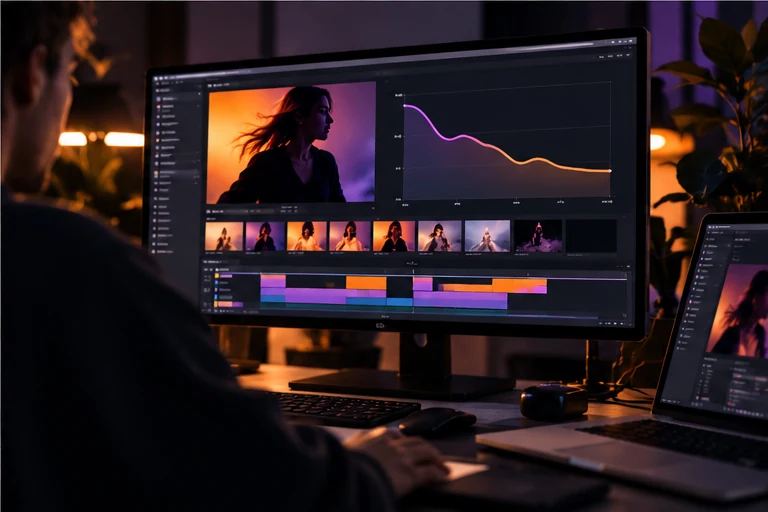
9. Every video starts from a new plan
A changing mix of unrelated ideas makes learning difficult. Choose a few repeatable formats: product demonstrations, answers to buying questions, comparisons or project stories.
Test different openings within a format. Keeping part of the structure consistent makes it easier to identify which idea deserves another version.
Before / After: the same product, a clearer opening
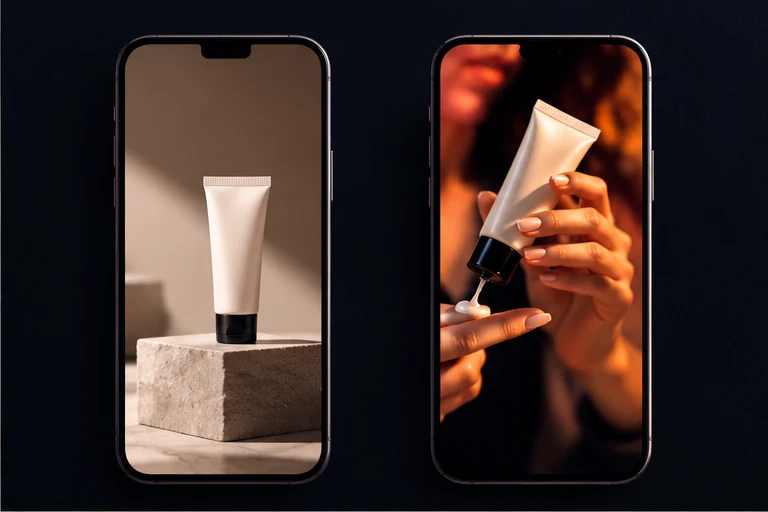
Before: a cosmetic ad begins with a logo and a general claim about a new product. The useful demonstration arrives late.
After: the first shot shows the actual texture on a hand. A short caption tells viewers what they are seeing. The next shots explain the product and lead to a relevant next step.
Takeaway: show the information you promised early. This is a proposed creative revision, not evidence that the revised version achieves higher reach.
Review your last five Reels
Record each video’s subject, opening, length, average watch time and available actions connected to the business. Leave missing data blank. Choose two videos that did their intended job best and look for useful similarities.
Use those observations to write the next few scripts. Check the idea, structure and message before searching for a perfect posting time.
Explore the scope of our creative and production services before preparing your brief.
Review your short-form video with WAISME.
Frequently asked questions
Can low views mean an account problem?
They can have several causes. Check available account status information as well as the content and its results before choosing an explanation.
Will hashtags fix low reach?
Do not treat a hashtag list as a substitute for a clear idea and relevant material. Review performance across comparable videos.
How long should a Reel be?
Use the time needed to explain the idea without unnecessary repetition. Judge the result against your audience and objective.
Ready to create something for your brand?
Let’s review your content and plan the next steps.
Let’s talk ↗